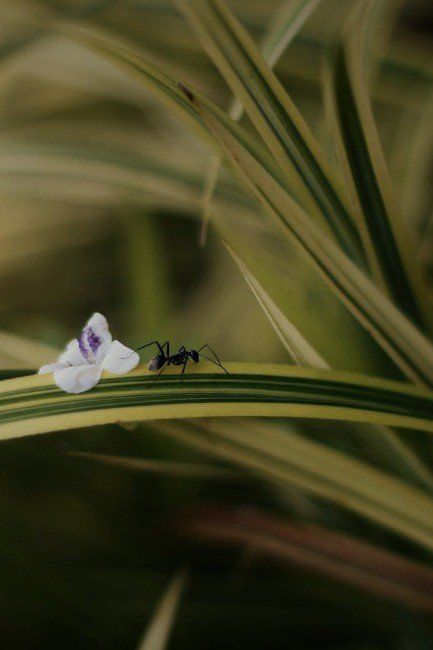
The quest for a quick, affordable fix to common household pests often leads to the kitchen pantry. Among the myriad of home remedies, salt frequently emerges as a contender in the battle against ants. But when faced with an unwelcome ant invasion, many homeowners ponder: Helpt zout tegen mieren? Or, more directly in English, does salt truly help against ants? While the idea of a readily available, non-toxic solution is appealing, the reality of salt's effectiveness against ant colonies is far more nuanced than a simple yes or no.
Ants, those industrious little insects, are a common sight, from bustling garden paths to foraging trails across our kitchen counters. The visible ants you encounter are merely the worker bees of a much larger, hidden operation. These workers are tasked with finding food and resources to sustain the entire colony, including the queen and her young, deep within the nest. Merely eliminating these visible workers is a temporary measure at best, as the colony will simply dispatch more to take their place. To truly solve an ant problem, the root cause—the nest itself—must be addressed. So, where does salt fit into this picture?
The Allure of Salt: Why It's a Go-To Home Remedy
It's easy to see why salt is a popular choice for ant control. Firstly, it's cheap and ubiquitous; almost every household has a shaker of table salt readily available. This makes it an immediate, no-cost solution when an ant trail suddenly appears. Secondly, compared to harsh chemical pesticides, salt is often perceived as a 'natural' and safer alternative, especially for homes with pets or young children. Many believe that since it's a common food ingredient, it must be harmless. This perception fuels the belief that salt can be an effective and responsible way to tackle an ant problem.
However, the safety aspect needs careful consideration. While salt might be less acutely toxic than some synthetic insecticides when applied externally, ingesting large amounts of salt is harmful to any organism, including pets and humans. The primary concern with using salt against ants lies not in its immediate danger to larger creatures from casual contact, but rather in its overall inefficiency for genuine ant eradication.
Does Salt Really Work Against Ants? The Scientific Perspective
Let's get straight to the point: Helpt zout tegen mieren? Yes, salt does affect ants, and it can even kill individual ants. The mechanism is rooted in osmotic imbalance. When an ant ingests salt, or comes into direct, prolonged contact with it, the salt begins to draw moisture out of its body. Ants, like many insects, are highly susceptible to dehydration. This process can be fatal, leading to internal distress and, as some accounts dramatically describe, causing the ant to effectively "explode" due to cellular disruption from rapid water loss. So, in theory, spreading salt where ants are present could lead to their demise.
However, the crucial distinction lies between killing individual ants and eradicating an entire colony. An ant colony can consist of thousands, sometimes even hundreds of thousands, of individuals. The workers you see represent only a fraction of this population. Even if you manage to kill dozens or even hundreds of worker ants with salt, the queen continues to lay eggs, and new workers will quickly emerge to replenish the foraging force. This means that while salt might offer a temporary feeling of control by reducing visible ant activity, it does not tackle the source of the problem. It's akin to bailing water out of a boat with a hole in it; you might remove some water, but the leak persists, and the boat will eventually sink.
For a deeper dive into this topic, you might find Does Salt Work Against Ants? An Honest Look at Effectiveness very informative.
How to Use Salt (If You Insist): A Step-by-Step Guide
Despite its proven inefficiency for comprehensive ant control, some individuals may still wish to experiment with salt, perhaps as a temporary measure or simply because they have no other options at hand. If you decide to proceed with this method, here's how to apply it, keeping in mind its significant limitations:
- Observe Ant Trails and Locate the Nest: Before sprinkling any salt, take time to watch the worker ants. Identify their main foraging paths and, if possible, pinpoint the exact location of the ant nest. Tackling the problem at its source is always the most effective strategy, even with a suboptimal solution like salt.
- Apply Salt to Paths and Entrances: Once you've identified the main ant highways and the nest entrance, generously sprinkle salt directly onto these areas. The idea is that worker ants will either avoid these salted areas or, more optimistically, carry the salt back to the nest, where it might be consumed by other ants, including the queen.
- Repeat Application: This method is rarely a one-time fix. You will likely need to repeat the application multiple times over several days or weeks, especially if rain or foot traffic disturbs the salt.
It's important to reiterate that even with diligent application, this method is highly unlikely to solve a significant ant infestation. The sheer resilience and reproductive capacity of an ant colony often overwhelm the localized, individual-killing effect of salt.
Why Salt Fails: Addressing the Root Cause
The primary reason salt fails as a comprehensive ant control solution is its inability to effectively target the entire colony, particularly the queen. As long as the queen is alive and healthy, she will continue to produce eggs, ensuring a constant supply of new workers. Killing a few hundred foraging ants with salt is a minuscule blow to a colony that can number in the tens of thousands. These are the key reasons for its failure:
- Limited Reach: Salt primarily affects ants that come into direct contact with it or ingest it on the surface. It rarely penetrates deep enough into the nest to reach the queen or the majority of the colony.
- Worker Replacement: Ant colonies are designed for redundancy. If a foraging party is eliminated, the colony simply sends out more workers. This makes surface treatments largely ineffective in the long run.
- Environmental Impact: Using large quantities of salt in your garden can harm plants by increasing soil salinity, impacting water absorption, and potentially affecting beneficial soil microorganisms.
- Inconsistent Effectiveness: Unlike targeted baits or insecticides, salt doesn't have a consistent delivery mechanism to the heart of the colony.
For many, the perceived "cheapness" of salt is outweighed by its ineffectiveness, leading to prolonged frustration and ultimately, the need for a more robust solution. Dive deeper into this cost-benefit analysis at Salt for Ant Control: Cheap Home Remedy or Ineffective Myth?
Superior Ant Control Solutions: What Really Works
If you're serious about getting rid of ants quickly and effectively, professional pest control products or proven alternative methods are far more reliable than salt. For around the cost of a few cups of coffee, you can invest in solutions designed to eliminate the entire colony.
Effective Commercial Products
- Ant Baits (Gel or Stations): These are highly effective because they leverage the ants' natural foraging behavior. Worker ants are attracted to the bait, ingest it, and carry it back to the nest to share with the queen and other colony members. The slow-acting poison then spreads throughout the colony, eventually eradicating it.
- Ant Powders and Granules: These can be sprinkled directly into cracks, crevices, or around the perimeter of your home and nest entrances. They work by contact or ingestion, and some types are designed to be carried back to the nest.
- Ant Sprays: Useful for immediate knockdown of visible ants, but generally less effective for long-term colony elimination unless they target nest entrances directly and repeatedly.
Alternative Home Remedies (with caveats)
While still not as potent as commercial products, some other home remedies offer better results than salt for localized issues or as deterrents:
- Vinegar: Ants dislike the smell of vinegar. A mixture of two parts water to one part white vinegar can be sprayed on ant trails and entry points to disrupt their scent trails and deter them. Be cautious around sensitive plants.
- Boiling Water: For outdoor ant mounds, carefully pouring boiling water directly into the nest entrance can kill many ants on contact, including the queen if the water penetrates deep enough. This often requires repeated applications.
- Coffee Grounds: Sprinkling used coffee grounds on ant paths or nest entrances is believed to deter ants due to their strong smell.
- Herbs and Spices: Ants are repelled by strong scents. Basil, cinnamon, garlic, cloves, nutmeg, oregano, rosemary, and sage can be placed near entry points or on ant trails as natural deterrents.
Preventing Future Ant Invasions
The best defense against ants is a good offense in the form of prevention. By taking a few proactive steps, you can significantly reduce the likelihood of future infestations:
- Maintain Impeccable Hygiene: Always clean up food spills immediately. Store food in airtight containers, and never leave pet food out overnight. Regularly sweep and vacuum floors, especially in kitchen and dining areas.
- Seal Entry Points: Inspect your home for cracks and gaps in foundations, walls, windows, and doors. Seal these potential entry points with caulk or weatherstripping to block ants from coming inside.
- Trim Vegetation: Keep shrubs and tree branches trimmed away from your house, as these can serve as bridges for ants to access your home.
- Address Moisture Issues: Fix leaky pipes or damp areas, as ants are attracted to sources of water, especially during dry spells.
Conclusion
So, to revisit the question, helpt zout tegen mieren? While salt does have a detrimental effect on individual ants, it is largely ineffective as a standalone solution for an ant infestation. It fails to address the core problem—the hidden colony and its queen. Instead of wasting time and effort on a method that offers only temporary, superficial results, it is far more advisable to invest in proven ant control products like baits or consider effective alternative home remedies. Ultimately, combining robust extermination methods with diligent preventative measures offers the most sustainable and satisfactory solution to keeping your home ant-free.